Ch Charles Hong Teaching E-Portfolio
Illustration of Mr. Hong kneeling at eye level with elementary students who are eagerly raising their hands in a sunlit classroom

Charles’ E-Portfolio

Elementary & middle-school educator in the Bay Area — building classrooms where every child feels seen first, and learns deeply because of it.

Multiple Subject Credential — Clear Reading & Literacy Added Authorization M.S. Reading & Literacy, CSU East Bay Google Certified Educator L1 & L2
Résumé & Credentials ↓
Illustrated classroom scenes are used throughout this portfolio in place of student photographs.

About Me

Being the educator I needed

I became a teacher for one straightforward reason: to be for my students the adult I needed when I was their age. I grew up as an English Learner, the son of Korean immigrants. My parents worked extraordinarily hard, yet language and cultural barriers meant schoolwork was something I largely faced alone. I knew food insecurity, bullying, and the quiet ache of not quite belonging — at home or at school.

That history is not a limitation in my classroom; it is my sharpest professional tool. It taught me how isolating school can feel, and it grounds my teaching in genuine empathy. Before children can take academic risks, they need to feel seen, valued, and reflected in the room. Every learner arrives with real strengths, and my job is to design instruction carefully enough that each one can find a genuine win — and evidence that they are headed somewhere meaningful.

“Students must feel seen, valued, and culturally represented before they can truly learn.”

Beyond the classroom

I am a Fremont native — Durham Elementary, Walters Junior High, and Kennedy High are my own schools. Growing up in this community gave me a lasting appreciation for the Bay Area’s diversity, and it makes connecting with local families feel natural rather than procedural.

To serve that community better, I completed a Master of Science in Reading and Literacy at California State University, East Bay, which carries the Reading and Literacy Added Authorization (RLAA). My cleared Multiple Subject credential includes an English Language Learner authorization, and I hold Google for Education Certified Educator Levels 1 and 2 — because I have seen well-chosen digital tools narrow the distance between students who start far apart.

Outside school, I sketch and paint still life and nature, read constantly to model the literacy I teach — I am working through PBS’s “The Great American Read” 100-book challenge — and recharge with walks and bike rides around Lake Elizabeth.

RésuméOpen PDF Multiple Subject Teaching Credential — ClearValid through August 2030 · EL authorization included Reading and Literacy Added AuthorizationClear · issued May 2025
Letters of Recommendation (2020–2025)2025 middle school principal · 2024 middle school assistant principal · 2023 4th-grade principal · 2023 mentor teacher · 2021 student-teaching supervisor · 2021 cooperating teacher · two 2020 volunteering coordinatorsSigned letters of recommendation and reference contact details are attached in EdJoin and available upon request.
G Google for Education — Certified Educator Level 1 G Google for Education — Certified Educator Level 2

At a glance

  • Education: M.S. Reading & Literacy (2025) and B.F.A., CSU East Bay; A.A. in Art, Ohlone College
  • Classrooms: 6th-grade inclusion, 4th grade, 6th/7th-grade ELA & social studies core, 3rd/4th combo student teaching
  • Now: substitute teaching across Pleasanton, Dublin, and Santa Clara unified districts, grades 1–8
  • Languages: English; Korean

Experience

Where I’ve taught

Four years of contracted classroom teaching across Fremont and Union City, preceded by student teaching in Hayward and followed by substitute teaching across three districts.

2025 – PRESENT

Substitute Teacher

Pleasanton USD · Dublin USD · Santa Clara USD

Day-to-day and assignment-based teaching across grades 1–8: stepping into unfamiliar classrooms, establishing trust and routines quickly, and carrying another teacher’s plans through with the same care as my own — including managing a combined 2nd-grade classroom during a district strike earlier in my career.

AUG 2023 – MAY 2025

Core Teacher, 6th & 7th Grade — English & Social Studies

Itliong-Vera Cruz Middle School, Union City
  • Ran a restorative “Action Plan” accountability system in general-education classrooms while differentiating ELA and social studies for English Learners and students with IEPs.
  • Directed immersive history projects for 60+ students — a live Wax Museum, Greek play performances, Roman column construction — culminating in public-speaking events such as Open House.
  • Planned weekly with grade-level teams, mapping standards-aligned assessments and materials across Holt Collections, TCI Social Studies Alive!, and Holt ancient/medieval history texts.
AUG 2022 – JUN 2023

Teacher, 4th Grade

Parkmont Elementary School, Fremont
  • Taught all subjects with UDL-based differentiation for a diverse class including students with special needs and English Learners.
  • Built creative-writing projects with real audiences — 100th-day narratives and “Trapped in a Snow Globe” stories — and a full poetry unit performed with student-made slides.
  • Funded a DonorsChoose project to build a classroom library of 100+ high-interest fiction and nonfiction titles.
  • Planned biweekly with three 4th-grade colleagues using Benchmark Advance, Math Expressions, Amplify Science, IXL, and i-Ready.
AUG 2021 – JUN 2022

Teacher, 6th Grade Inclusion

Cabrillo Elementary School, Fremont
  • Served a full-inclusion classroom — GATE students, a significant English Learner population, and students with special needs — across all subjects.
  • Designed MTSS math intervention for both 6th-grade classes (50+ students), using assessment data to form and adjust small groups.
  • Co-planned with mental-health staff, a special-education co-teacher, and a paraeducator to align small-group support with IEP goals.
AUG 2020 – MAY 2021

Student Teacher, 3rd & 4th Grade Combo

Treeview Elementary, Hayward

Taught through distance learning, designing digital accommodations for students with special needs and English Learners, and building a shared digital-resources toolkit for site colleagues. Earlier experience includes classroom volunteering at Durham Elementary and AVID tutoring at Kennedy High.

Culture & SEL

Classroom culture & social-emotional learning

The foundation comes first. Children learn from a teacher they trust, in a room where it is safe to be imperfect — so I model exactly that: making mistakes, laughing at myself, joining a four-square game or a P.E. run. Belonging is built in small, visible moments long before it shows up in test scores.

Trust

Letter to My Teacher

The year opens with a read-aloud of A Letter from Your Teacher on the First Day of School, followed by my own story — told honestly — and the expectations I hold for us. Students then write confidential letters back: goals, worries, things they want me to know.

Those letters become a baseline I return to all year — the basis for one-on-one conferences and for noticing the quiet changes a report card never shows. When a teacher goes first with vulnerability, students’ anxiety — the affective filter that blocks learning — drops, and trust has something real to stand on.

Community

Growing Hands & morning meetings

Our Growing Hands work at the start of the year makes one idea concrete: everyone in the room shares responsibility for keeping it safe.

Morning meetings pair reflection with public speaking. Borrowing astronaut Chris Hadfield’s distinction between danger and fear, students examine why a hard problem can feel threatening when it isn’t — then debate it. A portable voice amplifier and a student Mic Operator job mean even the shyest voice carries the room, and fluency practice hides inside the fun of a microphone showdown.

Expectations

Co-created norms, made observable

We write a Classroom Contract together, then translate abstractions into behavior: on our “Respect” anchor chart, respect looks like sitting up, listening actively, and using words like “may” and “please.” A consistent, non-punitive “Give Me Five” signal settles transitions in seconds instead of minutes.

Reinforcement runs on two tracks: immediate individual feedback — an approval stamp, blue raffle tickets for prosocial choices — and collective progress through Class Points, recorded on the board as additive fractions (50/100 + 5/100), so the management routine quietly teaches fraction sense every single day.

Digital SEL

Culture that survives a screen

During distance learning, community had to be engineered. I ran daily morale temperature checks through Google Forms, used Flipgrid so shy students could speak asynchronously without an audience, and structured live sessions with interactive boards and breakout rooms that kept peer relationships alive.

As a student teacher, I compiled that practice into a digital SEL and engagement toolkit for my site colleagues — leveled reading, digital manipulatives, virtual field trips, and participation tools — so the strategies outlasted my own classroom.

Restorative accountability, step by step

Accountability in my classroom is restorative, not punitive — a PBIS-aligned ladder that protects instructional time while teaching self-regulation. Select a step:

A quiet word, first

Most moments end here: a calm, private verbal redirection that names the behavior, not the child, and gives the student a genuine chance to reset. It keeps dignity intact and the lesson moving.

The Action Plan (Think Sheet)

Instead of an office referral, a student who needs more than a check-in completes a reflective Action Plan: what happened, what triggered it, who was affected, and what concrete steps will repair it. A parent signature closes the loop, so families are partners in the follow-through — and the student practices naming triggers and planning repairs, the core moves of self-regulation.

Mastery-based academic accountability

The same philosophy governs grades. A low test score is a starting point, not a verdict: before a retake, students complete a reflective diagnostic that pinpoints the exact procedural or conceptual error and lays out a corrective plan, signed by a parent. Standards stay high, the retake can’t be gamed, and families see precisely where their child stands.

Instructional Design

UDL, project-based learning & MTSS

Upper-elementary and middle-school students are ready for curiosity, independence, and real audiences — not single-format worksheets. My design layers three frameworks: Universal Design for Learning so every student has a way in, project-based learning so the work matters, and MTSS so data decides who gets what support, and when.

WritingGrade 4

Writing at 100 years old

Students imagined their whole lives and wrote reflective essays from the vantage point of their 100th birthday. A guided question organizer carried them chronologically from childhood to old age before a word of drafting began.

The hook: I photographed each student, aged the portraits, and set them into the essay documents — families roared at Open House, and students wrote like people whose words would be kept.

WritingGrades 4–6

Spooky stories, performed in the dark

Original scary stories moved through planning scaffolds — a story planner and a 5 Ws chart — into drafting, structured revision, and publication. Accountability came from audience, not points.

The audience: first read aloud to small groups in a darkened room with flashlights, then performed at home for families — lights off, everyone gathered round.

WritingGrade 4

Trapped in a Snow Globe

To make abstract plot structure tangible, each student designed a winter setting, was photographed and composited into their own drawn world, and only then wrote the story of being trapped inside it.

Why it works: the image does the spatial organizing first, so setting details exist before students have to generate text — concrete scaffolding for narrative writing.

PoetryGrade 4

A published class poetry book

We read Frost outdoors, drafted original poems, illustrated them in a Silverstein spirit, and bound everything into a class poetry book that went home to families. “Poems of possibility” written to students’ future selves were visualized in Slides and recited publicly.

Heard at Open House: a parent, reading the collection — “some of these poems… they’re deep.”

HistoryGrades 6–7

The Wax Museum

Students researched a historical figure who overcame real adversity, built visual timelines, wrote two-minute speeches, and then became their figure — in costume, in character — for 6th-grade visitors by day and families at Open House by night.

Built-in support: partners rehearsed speeches with a “Glows and Grows” rubric and sentence stems, giving English Learners a safe, low-stakes rehearsal space.

HistoryGrades 6–7

Bringing history to life

Medieval stained-glass art with descriptive plaques. Roman columns built to carry historical events. Clay terracotta soldiers. Hieroglyphics decoded by hand. Finished work hung as a gallery walk so students taught each other.

The principle: abstract eras become memorable when students make something with their hands and then explain it to a peer.

UDLNovel study

One novel, seven ways to prove it

For The Ghost in the Tokaido Inn, there was no multiple-choice test. Students built a marketing campaign for the book instead — posters, video trailers, character trading cards, short graphic novels, a staged play, or a webpage.

UDL in action: one rigorous comprehension standard, many legitimate ways to demonstrate it, each playing to a different strength.

UDLGrade 4

The California Mission Project, rethought

The classic mission model quietly grades parents’ craft skills and free time. My students built their missions digitally in Google Slides instead — researching, writing, and presenting work that was entirely their own.

Equity note: digital tools closed the resource gap between students instead of widening it.

Study skillsGrades 6–7

Cornell Notes against skimming

Students habitually scan dense history and science texts and retain little. I teach Cornell Notes explicitly — main ideas in one column, supporting detail in the other, a self-written summary at the end — and preload vocabulary and background with virtual tours and short videos before reading.

The effect: slower, active processing replaces passive scanning, and English Learners and students with IEPs meet rigorous text with the load already lightened.

MTSS

Intervention built from exit tickets

In a full-inclusion 6th-grade setting where over half the students were performing two or more grade levels behind, I paired exit-ticket data with i-Ready reports to design targeted math intervention for 60+ students across two classrooms. Materials were matched to the data — multi-digit arithmetic printed on place-value grids, for instance — so scaffolding attacked the actual misconception, not a generic one.

Research

Differentiate by profile, not by assumption

My credential research on Gardner’s multiple intelligences began with my own self-assessment — strongest in intrapersonal, interpersonal, and spatial intelligences, weakest in logical-mathematical, despite cultural stereotypes that would predict the opposite. The lesson I carry into planning: never infer a child’s profile from their background. Offer the options — headphones and audio for auditory learners, calm low-distraction spaces and visual cues for students with attention or sensory needs, room to spread out visual materials for collaborators — document what works, and let each student’s evidence speak.

Literacy Intervention

Literacy & targeted intervention

I came to literacy work as a former English Learner — and, in my first year of teaching, through three newcomers from Puerto Rico, China, and Afghanistan who arrived during a refugee resettlement. I did everything I knew, and went home most days feeling it wasn’t enough. That ache is why I earned a master’s in Reading and Literacy: so that feeling would be answered with method. The goal is automaticity — decoding so fluent that a reader’s mind is free for meaning and critical thought.

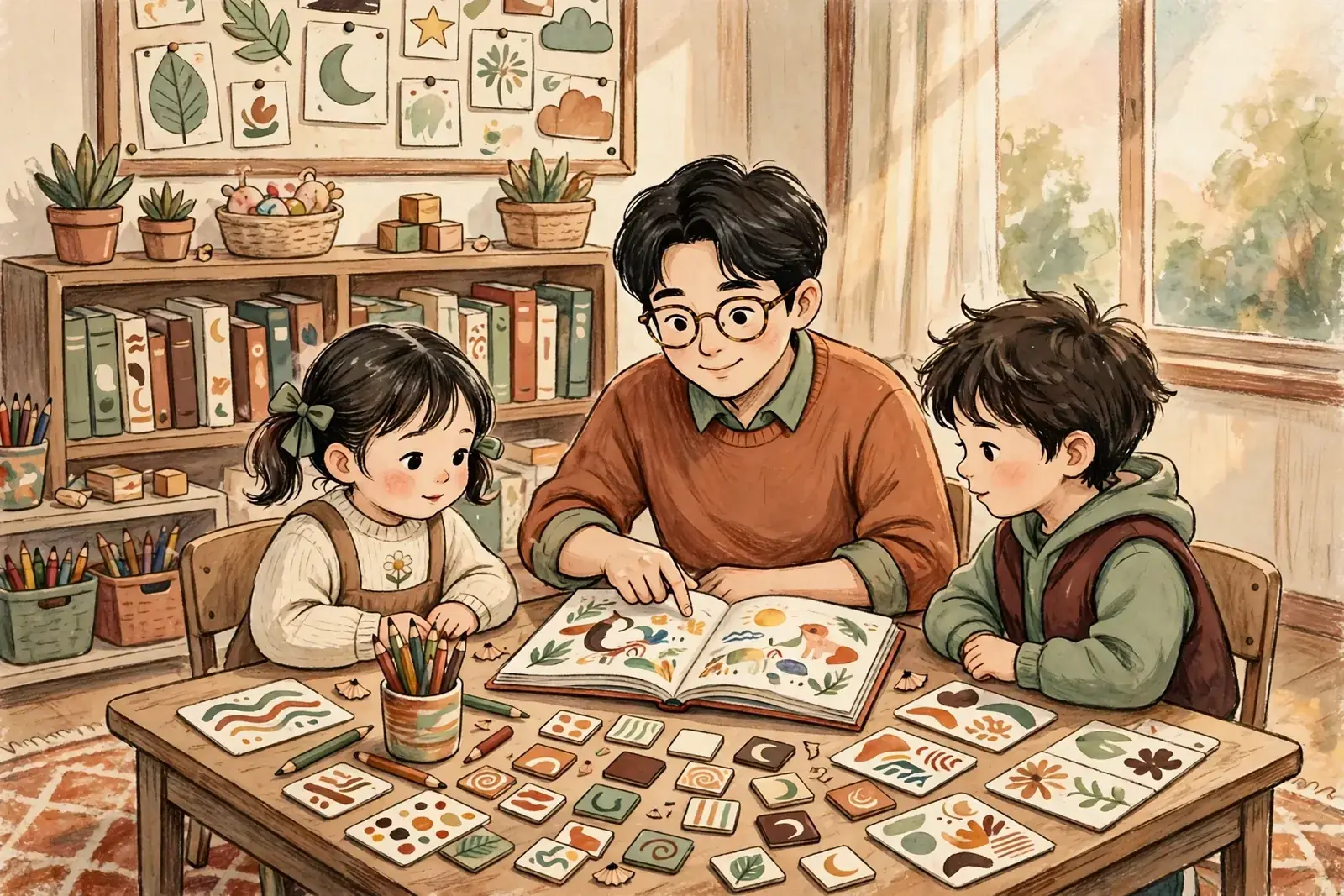
Illustration of Mr. Hong guiding two students through a picture book at a small-group table covered with sound cards

Assess first. Then teach the gap you actually found.

Intervention starts with diagnosis, not a workbook. The instruments I administer and interpret include:

CORE Phonics SurveyHeggertyInformal Reading InventorySan Diego QuickTest of Word Reading EfficiencyQualitative Reading Inventory (Pearson)Ekwall/Shanker Reading Inventoryi-Ready diagnostics

Foundational teaching draws on the same evidence base: explicit, systematic phonics; phonemic-awareness routines that have students physically manipulate sounds; poetry’s short, patterned lines for fluency; and frameworks like TPCASTT for pulling meaning out of figurative language.

Case study · Spring 2025

One reader, one semester: CORE Phonics Survey, before and after

A 4th-grade reader — a graphic-novel fan whose family speaks limited English at home — entered intervention with solid letter knowledge but fragile within-word pattern skills: blends came out with inserted or swapped letters, digraphs and r-controlled vowels were inconsistent, and pseudowords exposed a habit of recognizing words by sight rather than decoding them. Sessions combined Heggerty phonemic-awareness work (blending, segmenting, deleting, and substituting sounds, with hand motions to make phonemes visible), Explode the Code phonics focused on patterns like silent-e, and guided reading pitched carefully at her independent level — echo reading and page-by-page retelling included, with texts stepped down when multisyllabic words overwhelmed her.

Before intervention After one semester Scores out of 15 per skill area

Progress was real but modest — and the chart shows the honest wrinkle, too: CVC short vowels dipped a point even as every targeted pattern grew, with the largest gains exactly where instruction aimed (long-vowel spellings and low-frequency patterns, +2 each). Attendance gaps and the limits of virtual sessions capped what one semester could do; multisyllabic decoding (6 of 24 at intake) could not be re-assessed in the time available and is the first priority in the recommendations I handed on: continued explicit work on blends, digraphs, and r-controlled vowels, variant vowels and diphthongs, syllable-type strategies for multisyllabic words, word sorts — and reading kept at her independent level, graphic novels proudly included, so motivation survives the work.

Representation

A library where students can find themselves

A DonorsChoose grant built a classroom library of more than 100 high-interest fiction and nonfiction books, chosen deliberately to mirror the school’s diversity. Wordless picture books earn a special place: Shaun Tan’s The Arrival lets English Learners wrestle with the full complexity of the immigrant experience — and build empathy for it — without a single word standing in the way.

Reporting home

Families get the data in plain language

Every intervention ends with a parent report that translates the assessment table into ordinary words: what each skill is (a digraph is simply “letters that team up to make one sound”), what we practiced, what improved, and what to keep doing. A parent who understands the plan can extend it at the kitchen table.

Sample lesson: phonemic awareness in kindergarten

A 25-minute lesson for 24 kindergartners, aligned to CCSS RF.K.3 and ELD foundational-literacy standards, built after noticing students didn’t yet see that differently-spelled words can share sounds. The through-line: hear it, touch it, match it, prove it.

5 MIN · LAUNCH

Rhymes, read aloud

A rhyming picture book (Dr. Seuss does the job) with a pause on every page: which words just rhymed?

10 MIN · HANDS-ON

Match the rhyming toys

Tables of 4–5 sort real objects into rhyming pairs, saying each name aloud — sound structure you can hold.

THROUGHOUT · CHECK

Explain your match

I circulate and ask each group to defend a pairing — the reasoning, said out loud, is the assessment.

7 MIN · ASSESS

Draw the line

An independent worksheet matches pictured toys to their rhymes; advanced students match printed words instead of pictures.

3 MIN · CLOSE

Best rhyme challenge

Groups share solutions; everyone leaves hunting for rhyming objects at home, with multisyllabic rhymes next.

For emergent bilingual students, clue cards pair each object’s picture with its name pronounced in the home language alongside English — and worksheets can be customized the same way — so a skill a child already owns in one language transfers visibly into the other.

Family Partnerships

Family & community partnerships

My parents wanted to help me with school. Language, technology, and an unfamiliar system stood between that wish and any way to act on it. So every family-facing thing I make is governed by one question: what would have helped them? Not a summary of what happened in class — the tools, context, and confidence to actually take part.

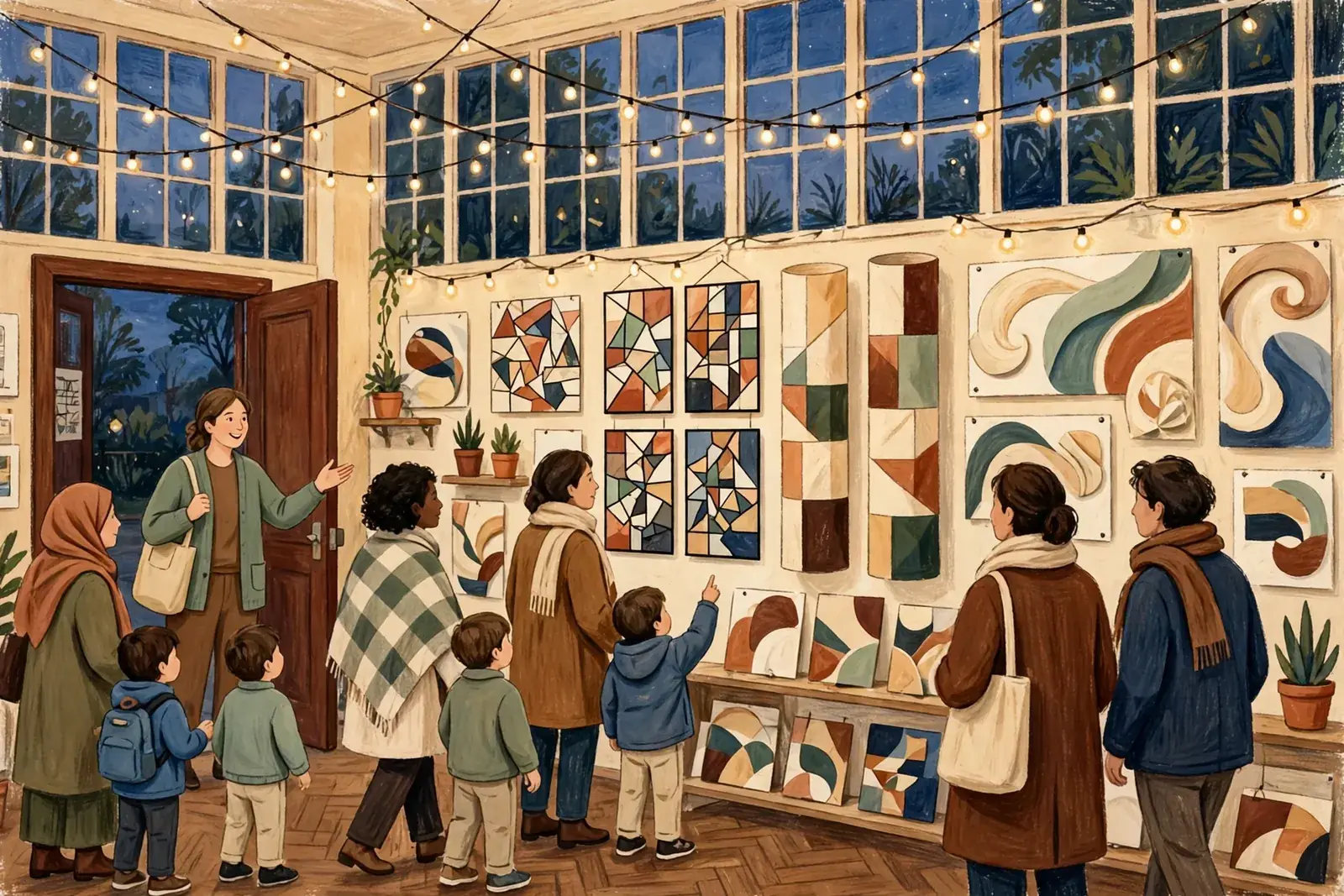
Illustration of families viewing student projects — stained-glass art and paper columns — at an evening open house
Newsletters

A newsletter that teaches the “why”

My monthly 4th-grade newsletters did report what we studied — place value and multi-digit operations, character analysis, California geography down to computing population density. But their real work was translation of a different kind: explaining why we learn it this way.

Families read, in plain language, what reading automaticity is and why it matters, how Cornell Notes turn skimming into retention, and why class points and raffle tickets are structured the way they are. Each issue pointed to something concrete to do at home: the relevant Khan Academy video, a specific IXL skill plan, how to choose a book by Lexile range, and questions worth asking about it afterward. The newsletters also carried the life of the room — microphone debates, poetry performances, the planetarium assembly, papel picado that connected Cinco de Mayo to geometry symmetry.

In practice
When a parent worried that benchmark reading tests seemed impossibly hard, the reply wasn’t reassurance — it was a working session in writing: how to preview a passage, skim first and last sentences, paraphrase each paragraph in one line, hunt context clues, compare every answer choice, and use i-Ready’s own reports to target vocabulary and informational text at home.

The parent wrote back to say the detailed guidance on improving comprehension was genuinely appreciated. That exchange is the model: a concern answered with a strategy a family can use the same evening.

Parent guide

Demystifying “new math” for Grade 2 families

Modern math is where many parents feel locked out first, so I built a presentation that walks through it respectfully: what the Common Core actually asks for, why the emphasis shifted to fewer topics in greater depth, and a side-by-side of 43 + 36 solved by rote steps versus solved by place value — tens with tens, ones with ones — so the “new” method reads as understanding, not complication.

It closes with vetted next steps (Learning Heroes, Scholastic’s place-value guide, California Department of Education resources, bilingual standards documents) and everyday practice: addition and subtraction hiding in groceries, sports scores, saving, and cooking.

Bilingual resource hub

Multilingual resources, in English and Spanish

Built for the predominantly Latinx communities in the districts I serve, this bilingual (English/Español) presentation grew out of parent interviews — asking families directly about preferred communication, how they want behavior concerns handled, and anything sensitive I should know. Every page answers in both languages.

Inside: culturally sustaining books and films (from Esperanza Rising and Separate Is Never Equal to Coco and Under the Same Moon), bilingual reading tools (Storyworld, Newsela, ReadWorks, Epic!, Reading Rockets), translated school glossaries, food-assistance lines and local distribution search, school wellness and counseling portals, and scholarship pathways with their GPA requirements spelled out. Access is the curriculum’s first chapter.

Two-way, by design

The year starts with a family survey — a child’s strengths, goals, and home life — that shapes the culturally relevant material I choose. Feedback forms on my communication and the classroom environment follow, and constructive criticism genuinely changes practice.

Annotated, linked, translated

Nothing goes home as bare instruction. Directions arrive with annotated screenshots, direct links to the exact skill plan or video, and translated materials — because “read more” is not a plan, and a barrier I can remove is a barrier I should.

An audience beyond the teacher

Families are invited into the work itself: Wax Museum performances at Open House, poetry presented to friends first, then families, then the class, and a field trip to a junior-high cultural faire celebrating dozens of world cultures. Partnership you can attend beats partnership you’re told about.

Toolkit

Skills & platforms

Frameworks

  • Universal Design for Learning (UDL)
  • Project-Based Learning (PBL)
  • MTSS intervention design
  • PBIS & restorative practices
  • Fred Jones & Harry Wong classroom systems

Curricula taught

  • Benchmark Advance · SpringBoard
  • Math Expressions
  • TCI Social Studies Alive!
  • Holt Collections & Holt history texts
  • Amplify Science · California Studies Weekly

Digital tools

  • Google Workspace & Classroom · Canvas
  • i-Ready · IXL
  • Pear Deck · Edpuzzle · Flipgrid
  • Jamboard & digital manipulatives

Also

  • Korean (second language)
  • Reading: psychology, history, classic literature
  • Painting: still life & nature
  • Walking & biking, Lake Elizabeth